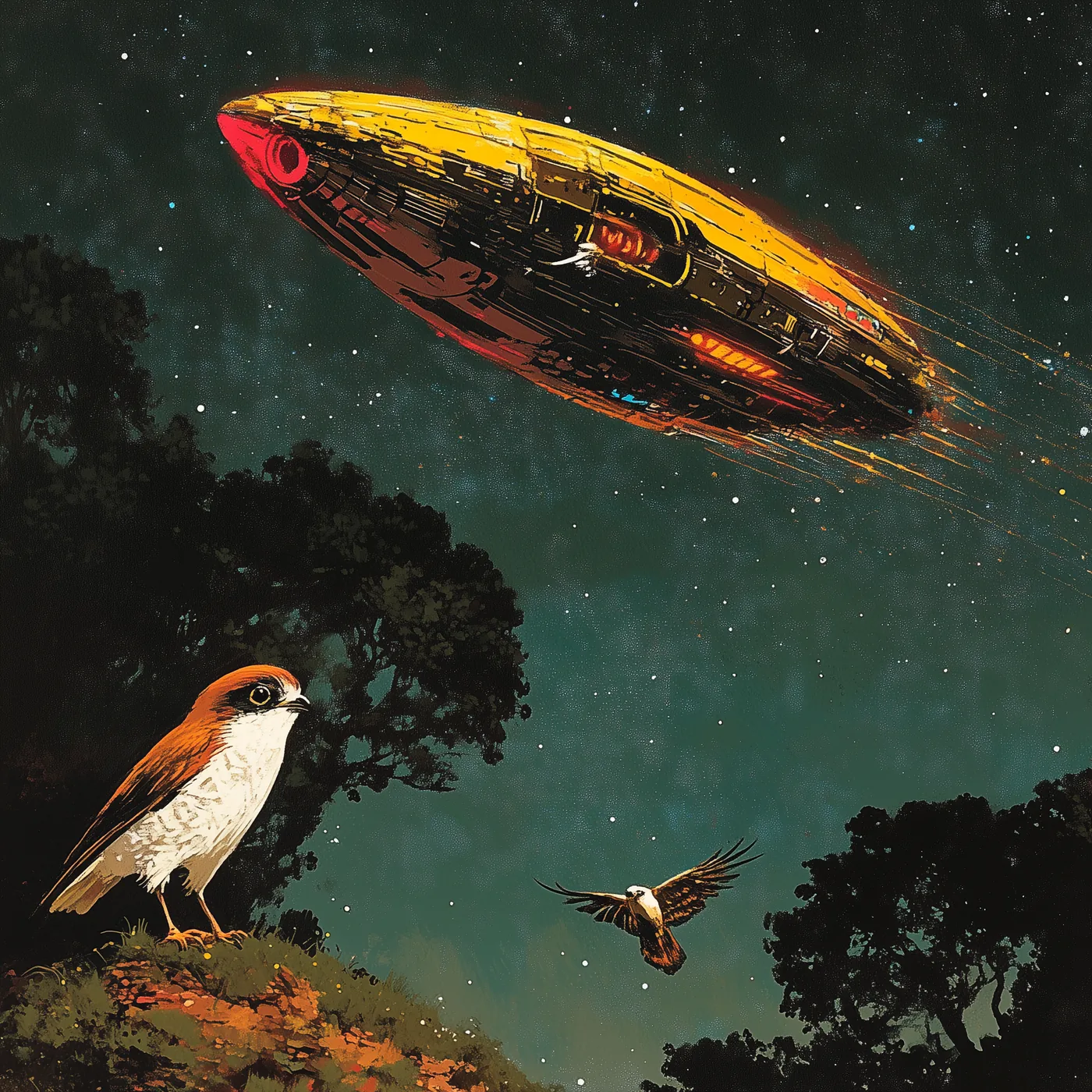
The hum of the bio-regeneration unit was a constant, low thrum in Unit 7, a sound that usually lulled patients into a more peaceful twilight. Dr. Anya Sharma adjusted her augmented reality lenses, the data overlays flickering across her vision, a cascade of numbers and waveforms dancing across the periphery of her sight. It was 2093, and while the gleaming towers of Neo-Kyoto pierced the clouds and personal space travel was as common as taking a bus, the human experience of mortality remained stubbornly, illusively, the same.
Anya worked at the Serenity Now Hospice, a facility nestled amidst a meticulously curated bio-dome, a verdant oasis amidst the sprawling urban landscape. It wasn’t just about making people comfortable as they slipped away. It was about ensuring a dignified, personalized transition, guided by intricate protocols developed over decades of technological and medical advancement, a delicate dance between cold science and warm compassion.
Today, her patient was Elias Vance, 87, a retired astro-engineer with a twinkle in his eyes and a rapidly failing neural network. His personalized care chip, embedded at the base of his skull, pulsed with a soft, amber light, indicating a critical decline. The chip, a marvel of miniaturized technology, was a constant monitor, relaying vital signs and neural activity in real-time, allowing for precise adjustments to his care.
“Morning, Elias,” Anya said, her voice warm, as she approached his bedside. The room was bathed in the soft, diffused light of the bio-dome, filtered through the foliage of genetically modified, bioluminescent plants. “How are we feeling today?”
Elias’s lips quirked into a faint smile, a network of fine lines crinkling around his eyes. “Like I’m floating in a nebula, Doc. A bit hazy, but not unpleasant. Glad to see I’m still here”. He raised a hand, the skin thin and translucent, to gesture weakly around the room. “Though, I must say, the view is a bit… terrestrial for an old stargazer.”
Anya chuckled, a soft, melodic sound. “That’s good to hear. The morphine drip is doing its job. Let’s check your vitals. We can always make some adjustments to the VR landscape later.”
She activated the integrated diagnostic scanner on her wristband, a sleek, silver band that hummed with quiet efficiency. The results instantly appeared on her lens display, a tapestry of data overlaid on her vision casting a slight glow upon her cheeks. Elias’s neural activity was fluctuating, his cardiac output was weakening, and his cellular regeneration was effectively non-existent. “Protocol 7.4.2,” she murmured, referencing the hospice’s internal guidelines, a complex web of algorithms and medical procedures. “Initiate the neural smoothing sequence and adjust the pain management algorithm.”
The neural smoothing sequence was a gentle cascade of targeted electrical pulses, delivered directly to the brain via the care chip, designed to minimize any agitation or distress as the brain’s functions began to shut down. The pain management algorithm, constantly adapting to Elias’s physiological feedback, adjusted the morphine dosage to maintain optimal comfort without hastening his departure, a delicate balancing act.
“You know, Doc,” Elias said, his voice a whisper, “I’ve seen some incredible things in my life. I’ve watched humanity reach beyond Earth, touch the stars. I’ve seen the rings of Saturn from a personal shuttle, the aurora borealis from the moon’s surface. But this…” He gestured weakly around the room, his gaze lingering on the bioluminescent plants.
Anya nodded, her heart aching slightly. She’d been doing this for fifteen years, and the emotional toll never truly lessened. Each patient was a universe unto themselves, a constellation of memories and experiences and in a way she had to relive it with each one of them.
“It is, Elias. And we’re here to make sure it’s as peaceful as possible.” She checked the bio-regeneration unit’s output, a sleek, white pod that enveloped the bed. It was maintaining a stable temperature and humidity, ensuring Elias’s skin remained comfortable and hydrated. The unit also emitted a low-frequency hum, a subtle vibration designed to soothe the autonomic nervous system, a gentle caress for the body. “How’s the VR simulation?” she asked, glancing at the holographic projector above his bed, a shimmering orb that cast a soft, ethereal light.
Elias was immersed in a personalized virtual reality environment, a recreation of his favorite childhood beach on the now submerged Maldives. The program was designed to evoke positive memories and provide a sense of familiarity and comfort, a digital sanctuary. “The waves sound real,” he breathed, his eyes closed, a faint smile playing on his lips. “I can almost feel the sand between my toes. The salt air… it brings me back.”
“Good,” Anya said. “That’s what we want.”
She checked his Advanced Directive, a digital document outlining his wishes for end-of-life care, a testament to his autonomy. Elias had opted for a “soft landing,” meaning minimal intervention beyond pain management and comfort measures. He had also requested a “neural echo,” a process that captured a snapshot of his neural activity just before death, allowing for a limited form of digital preservation, a digital ghost. “Protocol 8.1.1,” she reminded herself, “Prepare for neural echo capture within the next 12 hours.”
The neural echo was a controversial technology, raising ethical questions about the nature of consciousness and the boundaries of life and death. But for many, it offered a sense of continuity, a way to leave a digital legacy for loved ones, a flickering echo in the vast digital expanse.
Anya spent the next few hours monitoring Elias, adjusting his medication, and ensuring his comfort. She chatted with him about his life, his travels, his family, his first trip to mars. She listened to his stories, his regrets, his hopes, the tapestry of a life well lived. It was a delicate dance, balancing medical protocols with human connection, a combination of science and empathy.
Around midnight, Elias’s breathing became shallow and irregular, a faint rattle in his chest. His neural activity spiked, then began to decline rapidly, the waveforms on her lens display flattening. “It’s time,” Anya said softly, activating the neural echo capture sequence.
The room was bathed in a soft, blue light as the scanner pulsed, a gentle hum resonating through the air, capturing the final moments of Elias’s neural activity, the last vestiges of his consciousness, then he was gone. His heart had stopped beating, a silent cessation. Anya deactivated the bio-regeneration unit and closed Elias’s eyes, a gesture of finality. She then initiated the “transition protocol,” a series of automated procedures that prepared the body for its final journey, a respectful farewell prior to his being moved to the crematorium.
She felt a familiar sense of sadness, a pang of loss, but also a sense of peace, a quiet satisfaction. She had done her job, ensuring Elias’s transition was as comfortable and dignified as possible, a gentle passage. She remembered hearing accounts of unassisted death in her youth and felt comfort knowing her work was making a difference for people.
Later that afternoon, Anya sat in the staff lounge, a quiet space with panoramic views of the bio-dome, sipping a cup of chamomile tea. The lounge was quiet, the only sound the gentle hum of the building’s ventilation system, a soft, white noise. “Another one gone,” said Nurse Kai, a veteran of the hospice, his face etched with the lines of countless goodbyes.
Anya nodded. “Elias Vance. He was a good man. He told me about his first trip to the outer planets. A real pioneer. One of the earliest of the post Musk era astronauts.”
“For the most part, they all are,” Kai said. “That’s the thing about this job. You see the best and worst of humanity, all in the same breath. The bravery, the fear, the love… it’s all here.”
Anya smiled, a faint, weary smile. “I’ve been trying to learn to appreciate the small moments, the quiet victories. A peaceful death is a victory in itself, a final act of grace.”
“It is,” Kai agreed. “It is.” They sat in silence for a moment, each lost in their own thoughts. Anya thought about the neural echo, the digital snapshot of Elias’s consciousness, a ghost in the machine. She wondered what it would be like to exist as a digital echo, a whisper of a life lived. “You ever think about your own end?” Kai asked, breaking the silence, his voice low.
Anya shrugged, a subtle movement of her shoulders. “Sometimes. But I try not to dwell on it. We all have our own paths to follow, unknown journeys to take. I’ll delve into dealing with my demise later.” Anya finished her tea and stood up, the chair scraping softly against the floor. “I’m going to check on Mrs. Peterson in Unit 3.” As Anya walked past the large plate window that overlooked the biodome she saw a sudden flash of a shadow on the glass. Startled, she looked up just as a sparrow being chased by a small hawk, its talons extended, smashed into it.